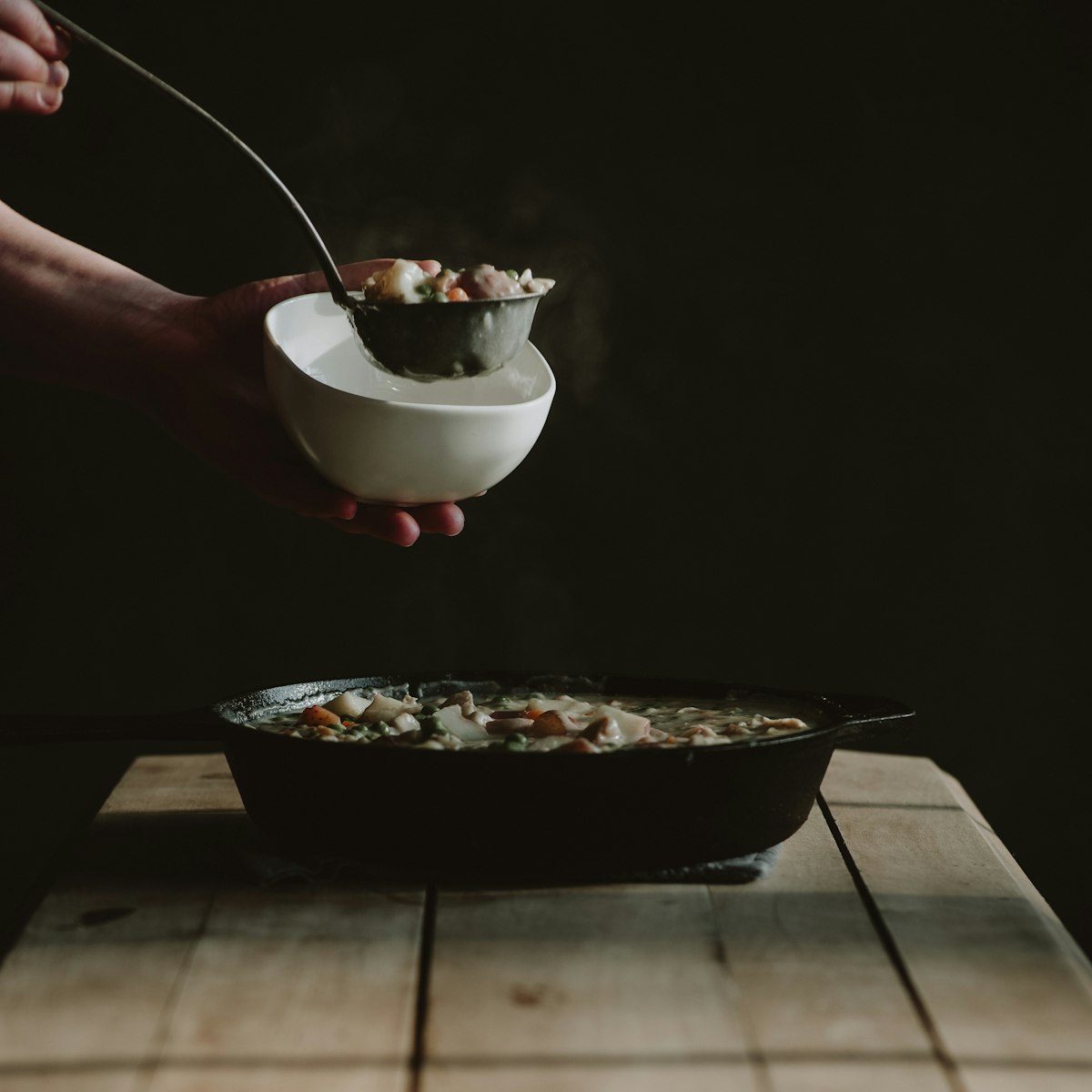
"Do not ask how to make the exact stall version in 45 minutes. Ask how to keep the soul of the dish while making it realistic for tonight."
Traditional Bún Bò Huế rewards patience. That is part of its beauty. But not every home cook has six hours, a giant stockpot, and a free morning to build an all-day broth.
That does not mean weeknight Bún Bò Huế is a lost cause. It simply means you need to be honest about the goal. You are not trying to recreate a market stall that started simmering before sunrise. You are trying to build a bowl that still tastes unmistakably like Bún Bò Huế while respecting real-life time limits.
What Makes a Faster Version Work?
A faster version succeeds when it protects the identity of the dish. That means you do not want to remove the elements that make the bowl itself:
- Lemongrass — the aromatic anchor
- Shrimp paste or mắm ruốc — the savory depth
- Chili element — the warmth
- Thick noodles — the texture
- Fresh herbs and lime — the finishing contrast
Those are the non-negotiables. For a full breakdown of what each ingredient contributes, see our essential ingredients guide.
Where You Can Simplify
You can simplify the timeline in a few realistic ways:
- Use pressure cooking instead of long stovetop simmering
- Reduce the number of meat cuts — beef chuck alone works
- Use fewer topping components — skip sausage and blood cake
- Make the chili oil ahead of time — it keeps well for weeks
- Skip harder-to-source extras for a simpler but honest bowl
The trick is to simplify structure, not identity.
A Practical Weeknight Formula
For a faster home version, use:
| Component | Weeknight Version | Traditional Version |
|---|---|---|
| Protein | Beef chuck or shank | Beef shank, pork hock, sausage, blood cake |
| Broth base | Pressure cooker, 45–60 min | Long simmer, 4–6 hours |
| Lemongrass | 4–5 stalks, bruised | Same |
| Shrimp paste | Mắm ruốc, 1–2 tbsp | Same |
| Chili | Pre-made saté or chili oil | Homemade saté |
| Noodles | Dried thick rice noodles | Fresh if available |
| Herbs | Whatever you can source | Full herb plate + banana blossom |
What to Expect from the Result
A weeknight bowl will not taste identical to a broth that has developed over many hours in a shop pot. That is okay. The goal is not perfect duplication. The goal is to create a version that still gives you the lemongrass, savory depth, spice, and contrast that define the dish.
If the bowl still smells like Bún Bò Huế the moment the steam rises, you are on the right track.

How to Preserve the Feeling of the Dish
Even in a faster version, do not rush the final assembly. Warm the noodles properly. Slice the meat with care. Serve the herb plate generously. Spoon chili oil over the surface. Let the bowl still feel like a bowl worth sitting down for.
That ritual matters. It is what separates a bowl of Bún Bò Huế from a bowl of "spicy noodle soup."
What Home Cooks Often Get Wrong
The most common mistake is flattening the dish into generic spicy noodle soup with no distinctive backbone. That usually happens when cooks skip the shrimp paste, use the wrong noodles, or forget the importance of the herb plate.
A second mistake is chasing restaurant depth with shortcuts that make the broth taste heavy instead of layered.
The Better Way to Think About It
Do not ask, "How do I make the exact stall version in 45 minutes?" Ask, "How do I keep the soul of the dish while making it realistic for my kitchen tonight?"
That question leads to better cooking.
Final Note
This is an honest, streamlined version of the dish — not a replica of an all-day market broth. Traditional Bún Bò Huế deserves time. Our full traditional recipe honors that timeline. But a thoughtful, faster version still has a place. In fact, it can become the bowl that gets more people cooking the dish at home in the first place.
And sometimes that is the bridge a tradition needs: not simplification for the sake of trend, but accessibility that still respects the original. For help finding what you need, see where to buy Bún Bò Huế ingredients outside Vietnam.