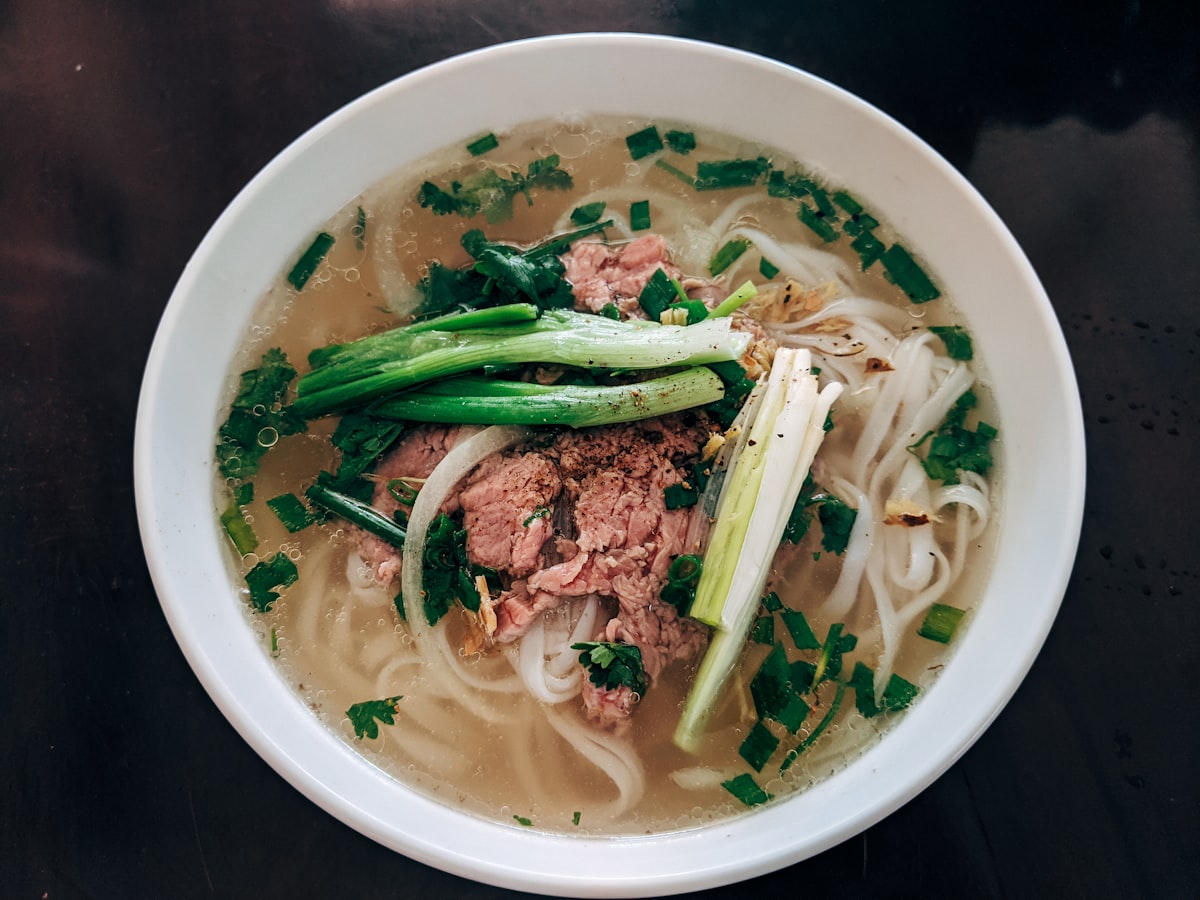
In Huế, bún bò Huế is not just a meal — it is a daily ritual of flavor, memory, and belonging.
A Bowl That Tells a Story
If you've ever tasted phở and thought you'd experienced the pinnacle of Vietnamese noodle soup, I have extraordinary news: you've only scratched the surface. Tucked away in the narrow streets and morning markets of Huế — Vietnam's former imperial capital — is a bowl of soup so bold, so layered, and so deeply satisfying that once you taste it, phở begins to feel like a gentle prologue.
Bún bò Huế (literally "Huế beef noodles") is a symphony of heat, umami, citrus, and richness. Its broth glows a deep amber-red, perfumed with lemongrass, simmered for hours with beef and pork bones, and ignited by a generous crown of chili oil. It is not subtle. It is not shy. It is, in every sense, a maximalist bowl of soup — and that's precisely what makes it magnificent.
Born in the Imperial City
Huế sits along the Perfume River in central Vietnam, a city of crumbling citadels, pagodas, and royal tombs. For centuries it served as the seat of the Nguyễn Dynasty, and its cuisine evolved to satisfy emperors who demanded complexity, refinement, and beauty in every dish.
Unlike the north's phở (born from French-influenced beef broths) or the south's hủ tiếu (with its Chinese roots), bún bò Huế is unmistakably central Vietnamese. It carries the region's love of:
- Bold spice — Central Vietnamese cooking is known for its love of chili
- Layered aromatics — lemongrass is used generously across the region's cuisine
- Fermented depth — shrimp paste (mắm ruốc) is used with fearless generosity
- Visual beauty — presentation matters, even in a street-side bowl
The dish reflects the Huế philosophy that food should engage every sense. The broth should be fragrant before the first sip; the colors should excite before the first bite.
What Sets It Apart
The Broth
Where phở broth aims for clarity and clean aromatics (star anise, cinnamon, charred ginger), bún bò Huế broth goes deeper. The base is built from:
- Beef leg and knuckle bones — simmered 6-8 hours for body
- Pork hock — adding gelatin and richness
- Lemongrass stalks — bruised and simmered whole
- Fermented shrimp paste — the umami backbone
- Annatto oil (dầu điều) — for that iconic reddish-orange color
- Chili flakes — because a bowl without heat isn't a bowl from Huế
The result is something thick with flavor but not heavy — a broth that coats the noodles, clings to the meat, and leaves a warm, tingling afterglow.
The Noodles
Bún bò Huế uses round rice vermicelli (bún) — thicker and chewier than phở's flat rice noodles. They have a satisfying heft that stands up to the intense broth, catching the chili oil in their curves.
The Toppings
A proper bowl arrives with an almost theatrical assortment:
- Sliced beef shank — tender, deeply flavored
- Pork knuckle — with its luscious, falling-apart texture
- Chả lụa — smooth Vietnamese pork sausage, sliced into pink rounds
- Congealed pork blood (optional but traditional) — adds body and iron
- A crown of chili oil — the finishing blaze
The Table
Perhaps the most beautiful part of bún bò Huế is what arrives on the side: a massive plate of raw herbs, shredded cabbage, banana blossoms, lime wedges, and sliced chilies. You build the bowl to your taste at the table — a handful of mint here, a squeeze of lime there, a few extra chilies if you dare.
Why the World Hasn't Caught On (Yet)
Phở's global dominance comes from its approachability — a clean, gentle broth that offends nobody. Bún bò Huế is different. It demands something from the eater:
- A tolerance for shrimp paste (an acquired aroma)
- A willingness to engage with heat
- An openness to unfamiliar textures (pork blood, tendon, knuckle)
But for those willing to meet it where it is, bún bò Huế offers something phở simply cannot: intensity. It's a bowl that grabs you. Every spoonful introduces a new note — the citrus brightness of lemongrass, the funky depth of shrimp paste, the slow burn of chili, the sweetness of pork bone marrow.
The Morning Ritual
In Huế, bún bò Huế is breakfast. By 5:30 AM, the city's markets are alive with clanging pots and the fragrance of simmering broth. Vendors who've been cooking since 2 AM ladle steaming bowls for workers, students, monks, and grandmothers alike. By 9 AM, most stalls have sold out.
There's something sacred about this rhythm — the way an entire city orients its morning around a single dish, prepared the same way by generation after generation. It's not just food. It's continuity.
Finding Your Bowl
If you're lucky enough to visit Huế, seek out the stalls near Đông Ba Market or along Trần Cao Vân Street. Order with confidence. Accept the shrimp paste. Add the herbs. Let the chili oil do its work.
And if you can't make it to Huế? The next best thing is to make it yourself. It takes time and intention, but the result is a bowl that connects you — across distance and time — to one of the world's great culinary traditions.
In the next post, we'll explore the essential ingredients you'll need to bring this bowl to life in your own kitchen.
🌶️ Did this story make you hungry? Check out our complete recipe guide to start cooking.