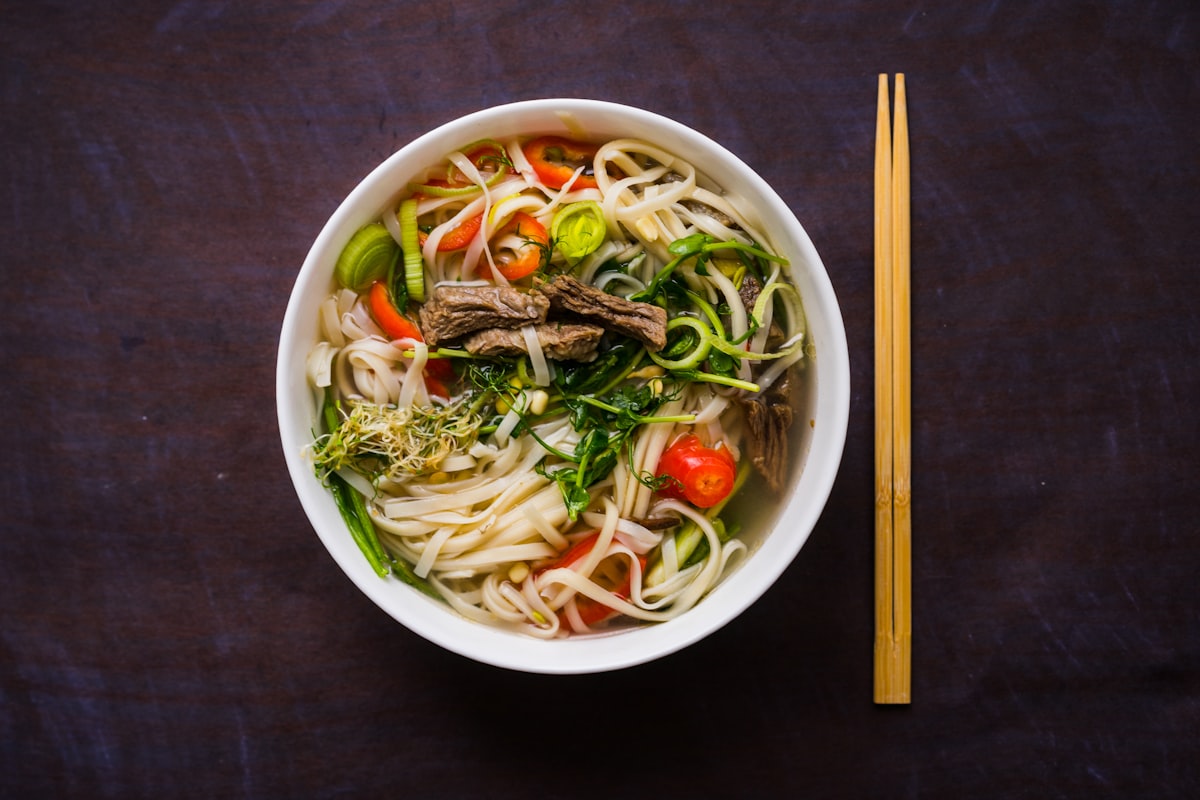
"The first spoonful is a question. The second is the answer. By the third, you understand why people cross oceans for a bowl."
If you have ever heard someone call Bún Bò Huế "pho's spicier cousin," that description is useful, but incomplete. It gives you a shortcut, not the full picture. Bún Bò Huế is not simply a hotter version of another noodle soup. It is its own world: deeper, fierier, funkier, more aromatic, and in many ways more dramatic.
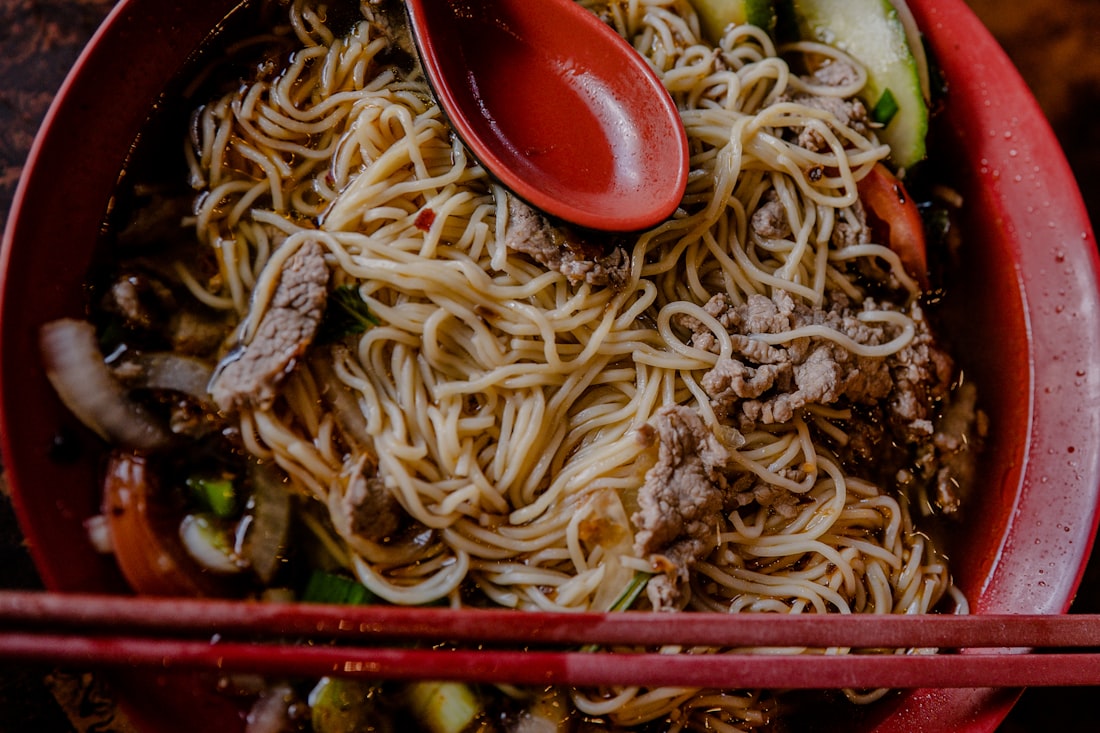
At its core, Bún Bò Huế is a Vietnamese noodle soup from the central city of Huế. The broth is built from beef and pork, perfumed with lemongrass, enriched with mắm ruốc Huế, and often crowned with a shimmering spoonful of chili oil. The noodles are thick, round rice vermicelli, and the bowl is usually finished with herbs, lime, and crunchy vegetables on the side.
What Does Bún Bò Huế Mean?
The name is straightforward once you break it apart:
- Bún = round rice noodles
- Bò = beef
- Huế = the city the dish comes from
So the name literally points you to "beef noodles from Huế." But the dish often contains more than beef alone. Pork hock, Vietnamese sausage, crab sausage, and even pork blood are all part of traditional versions.
What Does It Taste Like?
The best way to imagine the flavor is to think in layers.
First comes the fragrance of lemongrass. Then the savory body of the broth. Then the depth of fermented shrimp paste, which should make the soup feel more complex rather than aggressively fishy. Then the slow burn of chili. Finally, the herbs and lime lift the whole bowl so it never feels heavy.
A good bowl should taste bold, but balanced. It should be spicy, but not one-note. Rich, but still bright.
What Is Usually in the Bowl?
A traditional bowl of Bún Bò Huế often includes:
- Thick round rice noodles
- Sliced beef shank or brisket
- Pork hock
- Chả lụa or chả cua (Vietnamese sausage or crab cake)
- Chili oil or saté
- Scallions and onions
- A side plate of herbs, sprouts, lime, and banana blossom
Some bowls include pork blood, which is completely normal in traditional versions. Some do not. Like many beloved dishes, the exact bowl changes by region, cook, and family tradition.
Why Is It Different from Pho?
Pho leans clear, gentle, and aromatic. Bún Bò Huế is louder in the best possible way. The noodles are chewier, the broth is more assertive, and the spice is part of the identity of the dish, not an optional afterthought.
That is one reason devoted fans often become evangelical about it. Once you understand what the dish is trying to do, it is hard not to admire it. For a deeper look at these differences, see our complete comparison of Bún Bò Huế and Phở.
Is It Always Spicy?
Traditionally, yes, it is meant to have heat. But the actual intensity can vary a lot. Some cooks keep the broth itself moderate and let diners adjust the bowl with chili oil at the table. Others build the heat directly into the pot.
If you are new to the dish, do not let the spice scare you off. A balanced bowl is warm and exciting, not punishing. We explore this in detail in Is Bún Bò Huế Spicy?
Why Does It Matter So Much in Huế?
Bún Bò Huế is more than a food item. It is part of the rhythm of the city. In Huế, many people think of it as a morning dish, something eaten early while the broth is fresh and the pot is still alive with aroma. It reflects the city's culinary identity: layered, beautiful, disciplined, and expressive.
That connection is what makes the dish memorable. You are not just eating noodles. You are tasting a place. To understand that connection more fully, read about the history and heritage of Bún Bò Huế.
Where Should You Go Next?
If this is your first step into the world of Bún Bò Huế, the most useful next questions are simple:
- How is it different from pho?
- What herbs belong in the bowl?
- What ingredients make it authentic?
- Where should you eat it in Huế?
That is exactly where this journal goes next.